
Is Reading a Hobby?
By Brian Mills · Updated October 2026
Yes, reading is a hobby. A hobby is anything you do in your free time because you enjoy it, and reading for pleasure fits that definition as cleanly as fishing, gaming, or woodworking.
I wasn’t much of a reader as a kid. In my early 20s, a buddy got me into fiction, and The Expanse is the series that hooked me. It made my list of the best novel series for adults for good reason. I kept going and fell down a rabbit hole. Somewhere along the way I found Kings of the Wyld by Nicholas Eames, and after that it just sort of happened. I found out how much I’d been missing, and I kept buying books. Some of my favorite dates with my wife were trips to the bookstore, where we usually spent more than we planned.
Books turned out to be full of adventure, knowledge, and real lessons, from sci-fi and fantasy to history and nonfiction. And I’d argue the fiction has given me as much as the nonfiction.
Below, I’ll cover the “hobby or pastime” debate, how many people still read for fun, why it’s such a good hobby, whether reading every day is good for you, what counts as reading as a hobby, how to start, and whether you should put it on a resume.
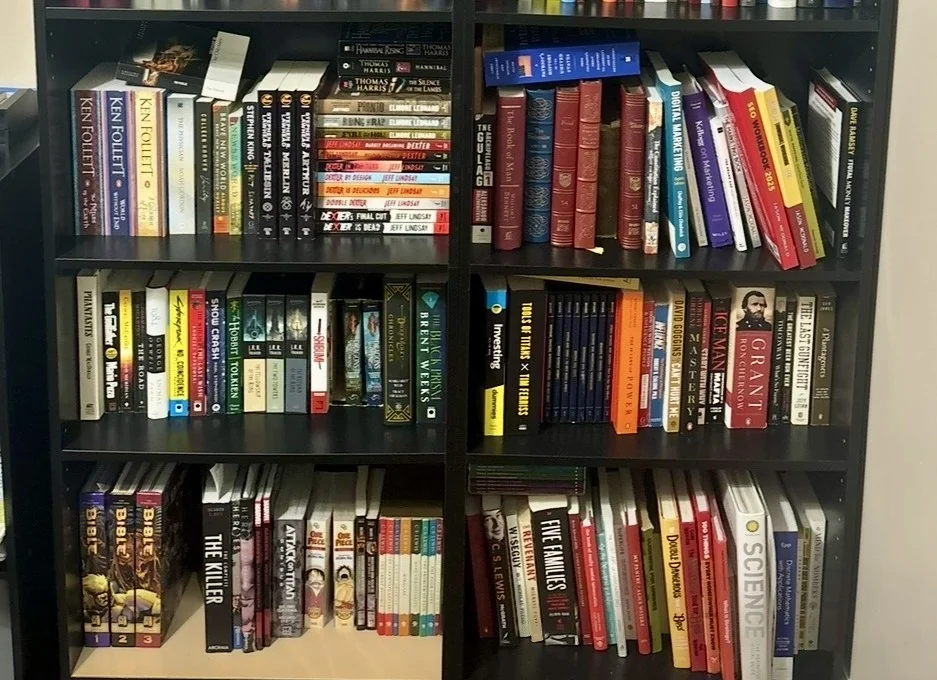
Is Reading Considered a Hobby or Just a Pastime?
Some people argue reading is too ordinary to count. Everyone reads emails, menus, and road signs, so how can it be a hobby?
The answer comes down to choice. Reading a work report is a task. Reading a mystery novel on a Saturday because you want to know who did it is a hobby. Same skill, different reason.
There’s also a difference between a pastime and a hobby. A pastime is anything that fills spare time. A hobby is a pastime you come back to on purpose, get better at over time, and build a bit of identity around. Reading checks every box:
- You keep a list of books you want to read next.
- You have favorite authors and genres.
- You read faster and understand more the longer you stick with it.
- You can share it through book clubs, online groups, or recommendations to friends.
So is reading considered a hobby? Yes, when you choose it. Required reading for school or work doesn’t count. The books you pick for yourself do.
How Many People Read as a Hobby?
Fewer than you might think, and fewer every year.
In a Pew Research Center survey from October 2025, 75% of U.S. adults said they had read a book in some format in the past year. That means a quarter hadn’t read one at all. Only 14% read more than 20 books.
Reading as a daily habit is rarer still. Researchers at the University of Florida and University College London studied 20 years of the American Time Use Survey. They found that the share of Americans who read for pleasure on a given day fell from 28% in 2004 to 16% in 2023.
So if you read for fun on a regular basis, you’re part of a shrinking group. I see that as a reason to start, not a reason to feel behind. You don’t need to read 50 books a year for it to count. You need to read on purpose, regularly, because you want to.
Why Is Reading Such a Good Hobby?
Is reading a good hobby? Yes, and it gives back far more than it asks. Here are the reasons that matter most to me.
- It fits into small pieces of time. This is the part most people get wrong. They picture a reading hobby as whole evenings in an armchair. It doesn’t have to be. A few pages in a waiting room or the pickup line, or ten minutes of an audiobook before bed, adds up to finished books.
- It plays like a movie. Once you’ve read enough, something odd happens. I stop noticing the words on the page, and the story plays out in my head like a film. Not everyone’s brain works that way, but mine does, and it’s my favorite part of the hobby.
- It’s cheap. A library card is free, and most libraries lend ebooks and audiobooks through apps like Libby.
- It trains your focus. Staying with one book for 30 minutes is the opposite of scrolling a feed.
- It improves how you write and speak. You pick up vocabulary and sentence rhythm without trying.
- It’s social when you want it to be. My wife and I turned bookstore trips into dates. Book clubs, a friend who swaps recommendations, Goodreads, and reading subreddits work too.
- You never run out. There will always be more good books than you have time for.
It takes you somewhere else. For about two years I worked as a computer technician for school programs. Two of my sites were an adult correctional education program and a high-security juvenile facility. Some of the students there were still kids. They told me how bored they were, and we’d end up talking about books. It surprised me how many of them struggled to read. National data backs that up. In a federal survey of incarcerated adults, 29% scored below Level 2 in literacy, compared with 19% of adults living in households. It sounds like a cliché, but a book is one of the few ways to leave a room you can’t walk out of. That stuck with me.
The main downside is that a reading hobby is easy to stall. A busy week, a slow book, or a phone within reach can stop you for months. That’s why the “how to start” section below matters more than the list of benefits.
Is Reading Every Day Good for You?
For most people, yes. Daily reading is one of the healthier habits you can build, as long as it adds to your life and doesn’t replace sleep or time with the people around you.
The best-known evidence comes from a 2016 Yale study of 3,635 adults over 50. Over 12 years, people who read books had about a 20% lower risk of dying than people who didn’t, even after accounting for other factors. Book readers also did better than people who only read newspapers or magazines. That’s a link, not proof that books add years to your life. But it’s a good sign.
For me, “every day” doesn’t mean hours. Here’s how it works as a dad with a young son:
- Mostly print, with some Kindle.
- Audiobooks early in the morning and late at night.
- A few pages during my son’s nap.
Some days that adds up to ten minutes. It still counts, and it keeps the habit alive. If your habit has slipped, my guide on how to get back into reading walks through restarting it.
I also log every book I finish in a paper notebook: the date I finished, a star rating, and a short review. I used Goodreads for a while. Writing it by hand makes me think harder about what I read, and it keeps one more thing off my phone.
What Counts as Reading as a Hobby?
More than most people think. If you choose it and enjoy it, it counts.
- Print books. The classic version.
- Ebooks. Same books, on a Kindle, tablet, or phone.
- Audiobooks. This is the most common argument. Listening still means following a story, tracking characters, and thinking about ideas. For a hobby, it counts.
- Graphic novels and manga. Full stories told with words and art.
- Short stories, essays, and long-form articles. Good options when you only have 15 minutes.
- Book clubs and rereading favorites. Talking about books and returning to old ones are part of the hobby too.
What usually doesn’t count: assigned reading for school or work, and skimming social media.
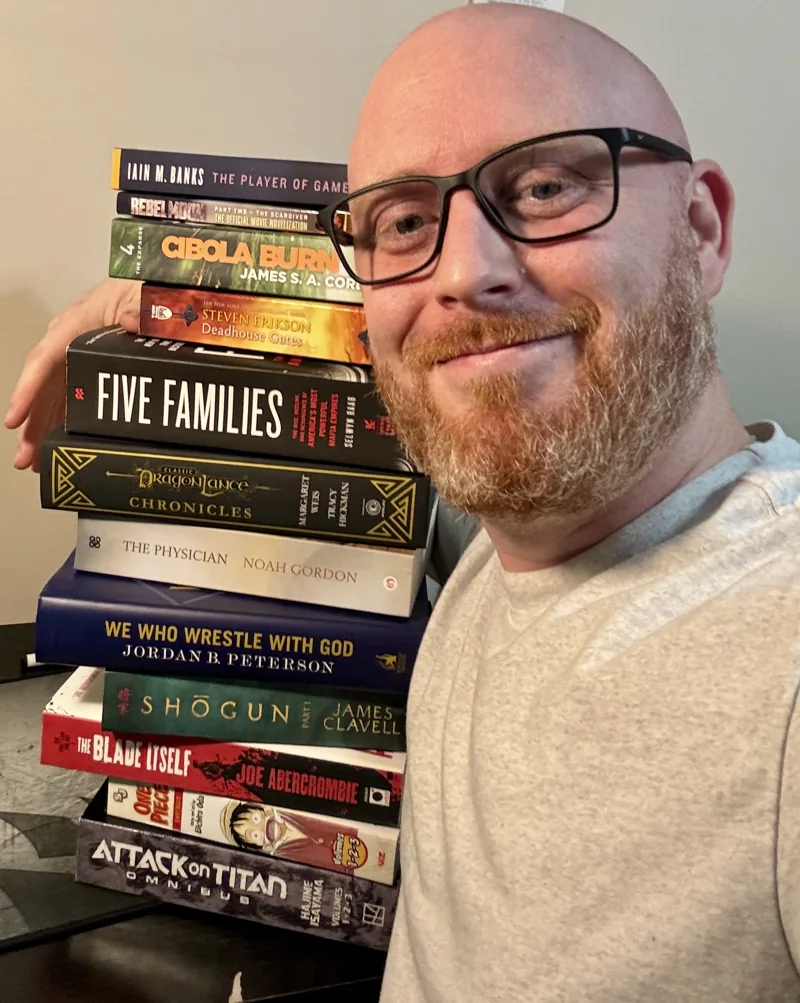
How to Start Reading as a Hobby
If reading has felt like homework in the past, the fix is to lower the pressure. These steps work for most people starting reading as a hobby:
- Pick a book you want to read. Not the one you think you should read.
- Start short. A book under 250 pages is easier to finish, and finishing one builds momentum.
- Set a small daily target. Ten pages or 15 minutes is enough.
- Tie it to something you already do. Morning coffee, lunch break, or the last 15 minutes before bed.
- Put the phone in another room. This one step does more than any reading app.
- Quit books you don’t like. Give a book 50 pages. If it isn’t working, move on.
- Track what you finish. A simple list makes progress visible.
Looking for books to get back into reading? Start with my picks for the best novel series for adults.
Can You List Reading as a Hobby on a Resume?
Yes, but make it specific. A line like “Hobbies: reading” tells a hiring manager almost nothing, and nearly everyone writes it.
For what it’s worth, I’ve never put reading on my resume. It has come up in interviews anyway, because it’s clearly something I love, and that’s the best way for it to come up. I also see reading as a foundational skill as much as a hobby. It’s something every kid and adult deserves to have, not just a line item.
If you do list it, give a detail that starts a conversation:
- “Reading: mostly sci-fi, fantasy, and history, logged in a handwritten reading journal”
- “Member of a monthly book club”
- “Reading through every Pulitzer Prize winner for fiction”
Only list it if you can talk about a recent book in an interview, because someone will ask. Keep hobbies at the bottom of the resume, and cut the section first if you’re short on space.
Frequently Asked Questions
Is reading a hobby or a skill?
Both. Reading is a skill you learn in school. Reading as a hobby means choosing to use that skill for fun in your free time.
Do audiobooks count as reading?
For a hobby, yes. You’re still following the story and engaging with the ideas. Many readers mix audiobooks with print to fit more books into a busy week.
How much do you have to read for it to count as a hobby?
There’s no minimum. If you read regularly because you want to, even one book a month makes reading a hobby.
Is reading a hobby for introverts only?
No. Reading is a good hobby for anyone. It can be a quiet solo activity, or a social one through book clubs, online groups, and author events.
Get the Free Reading Restart Checklist
Want a simple plan for your first 30 days? It’s a one-page PDF with a 30-day plan and a reading tracker you can print.
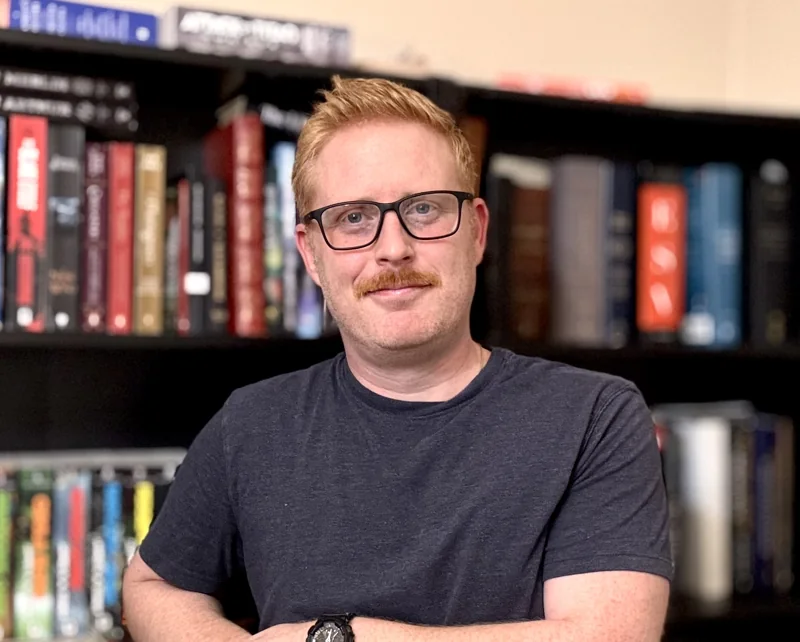
About the author: Brian Mills wasn’t a reader growing up. He found books in his early 20s and now reads across sci-fi, fantasy, history, and nonfiction.